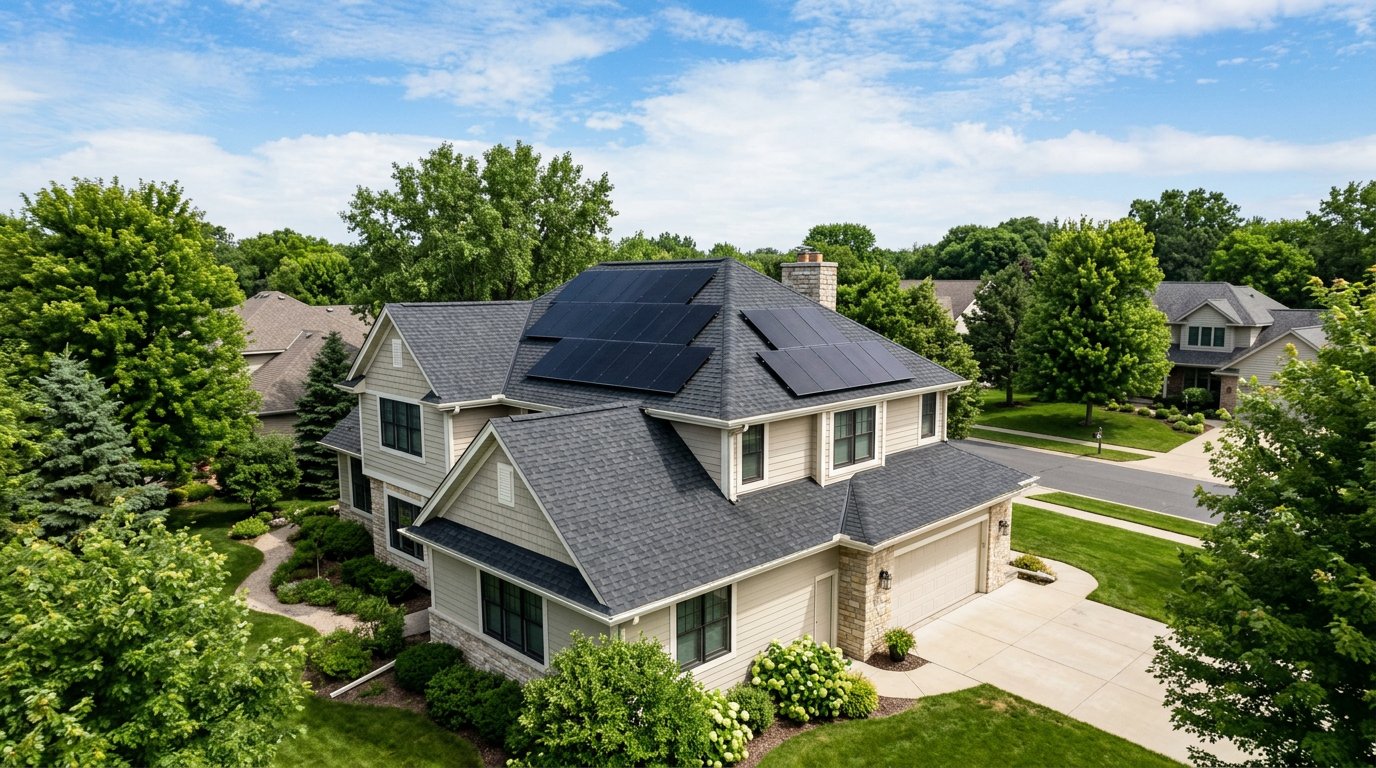
It is the very first question almost every Alaska homeowner asks us about solar: "But does it even work up here?" It is a fair question — the winters are long, the sun plays hide-and-seek, and the snow can pile deep. So let us walk through it honestly, without the sales gloss: what solar can and cannot do in a cold climate, and how to decide whether it belongs on your roof.
The short answer: yes — and cold can actually help
Here is the part that surprises people: solar panels love cold weather. Panels generate electricity from light, not heat, and they actually run more efficiently in crisp, chilly air than in sweltering heat. A bright, frosty afternoon can be a solar panel's favourite working conditions. What matters is how much light reaches the panels — not the temperature outside.
But what about the snow?
Snow is the honest complication. A blanket of the white stuff will block sunlight, and a panel buried under powder produces nothing. The good news: several things work in your favour.
- Panels shed snow surprisingly well. They sit at a slope, have a slick glass surface, and dark frames warm slightly in sunlight — snow slides off far sooner than it leaves your driveway.
- Steep roofs are an asset. The pitch that makes Alaska roofs shed snow also helps keep arrays clear.
- Reflection gives a bonus. Sunlight bouncing off surrounding snow can lift production on bright winter days.
And when a heavy dump does sit on the array? Production pauses for a few grey days, then resumes. A well-designed system is sized with the seasons in mind — summer abundance carries the year's total, while winter simply asks for patience (and a grid connection, for most homes).
Making friends with the midnight sun
Alaska's secret weapon is the other side of the calendar. Around the summer solstice, days stretch gloriously long, and systems produce energetically for months. That long, bright season is what a solar investment is really built on — it can offset a remarkable share of a home's yearly electricity, even with quiet winters. Think of it as filling a pantry in the good season, the way Alaskans have always done.
Do you need a battery?
Batteries are wonderful for one big thing: keeping essential circuits alive during an outage. They also let you store summer surplus for evening use. What they are not (yet) is a practical way to bank July's sunshine for dark December. For most homeowners we suggest this simple logic: grid-tied panels first, battery later if outages or energy independence matter to you. If you already dream of a quieter, more self-reliant home, we will size a battery honestly — no overselling.
What we check before installing
Every roof tells a different story. Before any panel goes up, our energy team reviews:
- Sun exposure — shading from trees, ridgelines and neighbouring structures through the seasons.
- Roof health — structure, remaining roof life and the ideal orientation and tilt.
- Electrical readiness — panel capacity, wiring routes and safe, tidy integration.
- Snow behaviour — where the slides will go, and how to protect walkways and siding below.
Pair solar with other efficiency upgrades — new windows, better insulation, a modern heating system — and every panel works harder for you. The warmest home is a team effort between the sun and your building envelope.
Solar in a cold climate is not about chasing perfection in January. It is about harvesting a glorious summer and letting the whole year add up in your favour.
So — do solar panels work in cold climates? Ours do, and our neighbours' do. If you are curious what your rooftop could harvest, we will walk your property, run the numbers honestly and tell you plainly whether solar makes sense for your home. No pressure, just sunshine math.
Find out what your roof could harvest.
Book a free solar assessment — we will review your roof, your sunshine and your savings potential, honestly.